Showing posts with label heavy machinery attachments. Show all posts

Thursday, August 28, 2025

Lifting Our Cities: Why the Decision to Buy Cranes is a Foundation for Success


Look at any major cityscape, and you'll see a symphony of steel and glass rising to the sky. Behind this breathtaking growth, a constant and powerful force is at work: the crane. It is the silent architect of our modern world, effortlessly lifting massive steel beams, positioning concrete panels, and shaping the very skylines we admire. For a business in the construction, logistics, or industrial sectors, the decision to acquire one of these giants is more than a simple purchase; it's a strategic investment in the future of your company and a commitment to building a legacy of your own.

While the option to rent cranes is a common practice, a growing number of companies are making the deliberate choice to buy cranes. This decision is not just about ownership; it’s about control, long-term financial stability, and the ability to compete for the biggest and most ambitious projects.

The Architects of the Modern Skyline

Cranes are the undisputed backbone of urban development. Without them, the high-rise buildings, bridges, stadiums, and power plants that define our modern cities would be impossible to build.

  • Vertical Growth: In an era of increasing urbanization and limited ground space, cities are growing vertically. Tower cranes, with their ability to reach immense heights and a wide radius, are the key to this vertical expansion. They lift materials, machinery, and even entire prefabricated sections of a building to the very top floors, a task that would be impossible with manual labor.

  • Infrastructure: Cranes are indispensable for building critical infrastructure. Mobile cranes are used for installing bridge beams, setting up communication towers, and placing large equipment on remote job sites. Crawler cranes, with their heavy-duty tracks, are the go-to choice for massive projects like dams and major highway interchanges where they need to operate on uneven or soft terrain.

  • Economic Engines: The presence of a crane on a job site is a visible sign of economic growth and progress. By enabling faster project completion, cranes reduce labor costs and bring new commercial and residential properties to the market more quickly, stimulating local economies.

For a business that wants to be a major player in this field, simply relying on rental availability isn't enough. The strategic decision to buy cranes is the first step toward becoming a foundational force in city development.

The Strategic Decision: Buy vs. Rent

For many companies, the question isn’t whether they need a crane, but whether they should rent or buy. While renting offers flexibility, ownership provides a host of long-term benefits that directly impact a company’s financial health and operational control.

1. Long-Term Financial Sense

Renting a crane is a recurring operational expense. Every day it's on a job site, you're paying a fee that adds to your overhead. For long-term projects that last for months or years, the total rental cost can quickly exceed the purchase price of the machine. When you buy cranes, you are investing in a depreciating asset, but one that can be sold for a significant portion of its original value. Your payments build equity, and you can recover a portion of your investment at the end of the machine's life, turning a cost center into an asset on your balance sheet.

2. Project Control and Availability

In a market with high demand, a rental company’s availability can be a major source of stress. You may not be able to get the specific crane you need when you need it, which can cause costly project delays. When you own a crane, you have complete control over its schedule. It is always ready for your next project, eliminating the need to coordinate with a rental company and allowing you to take on projects with tight deadlines and a high degree of certainty.

3. Customization and Specialization

While rental companies offer a wide range of cranes, they typically carry standard models. If your company specializes in a niche application that requires a specific boom length, counterweight configuration, or unique attachment, a standard rental may not be sufficient. When you buy cranes, you can customize them to perfectly fit your niche, giving you a competitive edge and allowing you to take on more specialized, high-margin projects.

Beyond the Hook: The Versatility of a Crane Fleet

The decision to buy a crane is often the first step toward building a versatile fleet. By owning different types of cranes, a company can broaden its capabilities and adapt to a variety of projects.

  • Mobile Cranes: These are the workhorses of a fleet. Mounted on wheels or a truck chassis, they can be driven directly to a job site. They are perfect for shorter-term projects that require quick setup and tear-down, such as placing HVAC units on a rooftop or setting steel beams for a small commercial building.

  • Crawler Cranes: For heavy lifting and jobs on uneven terrain, a crawler crane is the superior choice. Its tracks provide a stable foundation that allows it to operate on a wide range of surfaces, from soft soil to rugged rock.

  • Tower Cranes: These cranes are the unmistakable symbols of urban growth. A permanent fixture on a high-rise construction site, they are essential for lifting materials to great heights and across a wide horizontal area, ensuring that a building grows from the ground up efficiently and safely.

By acquiring a mix of these machines, a company can transform itself from a general contractor into a full-service provider, capable of handling complex projects from start to finish.


The Path to Ownership: Practical Considerations

The decision to buy cranes is a significant one, but it is not without its challenges. The long-term costs of maintenance, insurance, and storage must be factored in. For this reason, it is crucial to partner with a reputable dealer who can provide more than just the machine. Look for a partner who offers:

  • After-Sales Support: A reliable dealer will have a dedicated service department, skilled technicians, and a ready supply of genuine spare parts to minimize downtime.

  • Financing Options: Many dealers offer flexible financing plans that can help you manage the initial investment.

  • Operator Training: A machine is only as good as its operator. A good dealer will provide training to ensure your team can operate the crane safely and efficiently.

The crane is the very basis of our growing cities. It is a symbol of power, precision, and progress. For a business that wants to be a part of this growth, the decision to buy cranes is a strategic move that provides long-term financial stability, operational control, and the ability to take on the most ambitious projects. It's an investment that will lift not only your projects but your entire business to new heights.

Here’s more interesting news related to heavy machinery:
https://almarwan.com/ar/news/4546/top-forklifts-brands-in-2025

https://almarwan.com/ar/news/4545/earthmoving-rental-fleet-al-marwan

https://almarwan.com/ar/news/4544/renting-vs-buying-wheel-loaders

https://almarwan.com/ar/news/4543/used-dozers-from-al-marwan

https://almarwan.com/ar/news/4542/mewps-compared-to-scaffoldings

https://almarwan.com/ar/news/4541/dynapac-compactors-for-sale-al-marwan

https://almarwan.com/ar/news/4540/kobelco-crawler-cranes-lineup-at-al-marwan

https://almarwan.com/ar/news/4539/cifa-new-pumps

https://almarwan.com/ar/news/4538/excavator-operation-guide

https://almarwan.com/ar/news/4537/socma-forklifts-from-al-marwan

https://almarwan.com/ar/news/4536/scissor-lifts-safety-tips

https://almarwan.com/ar/news/4535/burj-azizi-in-uae

https://almarwan.com/ar/news/4533/kobelco-excavators-KSA-al-marwan-machinery

https://almarwan.com/ar/news/4532/forklifts-safety-and-maintenance

https://almarwan.com/ar/news/4531/top-3-compact-loaders-brands

https://almarwan.com/ar/news/4530/disneyland-construction-abu-dhabi

https://almarwan.com/ar/news/4529/cat-775-hauler-features

https://almarwan.com/ar/news/4528/2025-cifa-concrete-mixers-features

https://almarwan.com/ar/news/4527/types-of-boom-lifts

https://almarwan.com/ar/news/4526/types-of-jackhammers-for-heavy-machinery


Wednesday, October 16, 2024

5 Steps for Renting Heavy Machinery: A Smooth Process from Start to Finish

Streamline your heavy machinery rental process with these 5 simple steps for efficient project execution.


Renting heavy machinery can be a game-changer for construction and industrial projects, allowing access to top-tier equipment without the burden of ownership. Here's a step-by-step guide to streamline the rental process, ensuring your equipment is ready when you need it.


Step 1: Identify Project Needs

Before diving into the rental market, assess your project’s specific requirements. Determine what tasks the machinery will handle—earthmoving, excavation, or material handling. This helps narrow down the type and size of equipment required. For example, if large-scale excavation is involved, a 120-ton large excavator with a standard boom is an ideal choice. Meanwhile, projects requiring high material handling capacity might need a 53-ton large wheel loader.


Step 2: Search for Reliable Rental Providers

Once the equipment needs are identified, the next step is finding a trusted rental provider with a well-maintained fleet. Look for providers with a proven track record, good reviews, and a wide range of machines. Al Marwan, for instance, offers a variety of top-tier equipment, such as medium track loaders and other heavy machinery. Ensuring the provider maintains their equipment and offers reliable service reduces risks of downtime.


Step 3: Check Equipment Availability and Terms

After selecting a rental company, inquire about equipment availability for your desired dates. Confirm that the machine fits both the project's timeline and budget. It’s crucial to carefully review rental terms, including insurance requirements, maintenance policies, and penalties for damages or late returns. Some providers, like Al Marwan, offer flexible terms, making it easier to align with project schedules and needs.


Step 4: Complete Documentation and Delivery

The next step involves completing the necessary paperwork. Most providers require rental agreements outlining the terms, insurance coverage, and any other legal requirements. Once the documents are in place, coordinate the delivery to ensure the equipment arrives on time. For complex operations, schedule training or setup assistance if needed to get the most out of machines like large excavators or wheel loaders.


Step 5: Equipment Operation and Return

Once on-site, ensure the machine operates as expected. Keep track of performance to avoid unexpected issues, and promptly report any malfunctions. Most rental providers handle maintenance for long-term rentals, but it’s essential to maintain communication for smooth operation. Upon project completion, arrange for a timely return of the equipment to avoid extra charges. Clean and inspect the equipment to meet the provider’s return conditions.


Following these five steps ensures a smooth and efficient heavy machinery rental process. From assessing project needs to managing equipment returns, every step plays a vital role in maintaining timelines and budgets. Reliable rentals, like those from Al Marwan, provide access to industry-leading machines such as medium track loaders, large excavators, and wheel loaders, ensuring your project runs without a hitch.

Tuesday, September 24, 2024

Millers in Construction: What You Need to Know

Key Considerations When You Decide to Buy Millers for Your Construction Projects

In the world of construction, efficiency and precision are paramount. One piece of equipment that plays a crucial role in achieving these goals is the miller. Also known as a cold planer or milling machine, a miller is designed to remove surface layers of asphalt, concrete, or other materials. This article explores the importance of millers in construction and highlights some notable models available in the market.

Understanding the Miller

A miller is a specialized machine used for road maintenance, construction, and rehabilitation projects. It works by grinding away the top layer of a paved surface, allowing for repairs, resurfacing, or complete removal of the existing material. Millers come in various types, including wheeled and tracked models, each suited for specific applications and terrains.

How Millers Work

Millers are equipped with sharp, rotating drum cutters that grind the pavement. As the machine moves forward, the drum mills the surface, and the processed material is collected through a conveyor system. This allows for efficient removal and transport of the milled material, which can often be recycled for future use. The depth of milling can be adjusted based on project requirements, making these machines versatile for different tasks.

Importance of Millers in Construction

1. Surface Preparation

One of the primary functions of a miller is surface preparation. Before laying new asphalt or concrete, it is essential to ensure that the existing surface is adequately prepared. Millers effectively remove any damaged or uneven layers, creating a smooth base for new materials. This preparation is crucial for the longevity and durability of the new surface.

2. Cost-Effective Solutions

Using a miller can significantly reduce costs associated with road repair and construction. By milling the existing surface, contractors can reuse the milled material, reducing the need for new materials and lowering disposal costs. This recycling process not only saves money but also contributes to sustainable construction practices.

3. Precision and Quality

Millers offer a high degree of precision, ensuring that the milling depth is consistent across the surface. This precision is vital for creating a level base, which is essential for proper drainage and longevity of the new pavement. The ability to adjust milling depths allows contractors to tailor their approach to specific project needs, ensuring high-quality results.

4. Improved Safety

Milling can enhance safety on construction sites. By removing surface irregularities, such as potholes and cracks, millers help create smoother, safer roadways. Additionally, the milling process minimizes the need for extensive repairs, reducing the time equipment and workers are on-site, which decreases the risk of accidents.

5. Versatile Applications

Millers are not limited to road construction; they can also be used in various applications, including airport runways, parking lots, and industrial sites. Their versatility makes them invaluable tools for contractors looking to handle a range of projects efficiently.

Notable Miller Models

When considering a miller for your construction projects, it's essential to evaluate the available options. Here are a few noteworthy models:

1. Sakai ER550F Wheeled Miller

The Sakai ER550F is a reliable wheeled miller known for its efficiency and performance. This model is designed for easy maneuverability, making it suitable for various job sites. Its robust construction ensures durability, while the precision milling capabilities allow for high-quality surface preparation.

2. CMI Terex PR800-7 Miller

The CMI Terex PR800-7 is another excellent option, featuring advanced technology for efficient milling operations. This model provides exceptional cutting power and depth control, making it ideal for larger projects. Its ability to handle diverse materials enhances its versatility.

3. Wirtgen 2100DC Cold Miller

The Wirtgen 2100DC is a well-regarded cold miller known for its high performance and reliability. This machine is suitable for extensive milling operations, offering precise depth adjustments and effective material collection. Its advanced technology contributes to improved efficiency and reduced operational costs.


Millers are indispensable in the construction industry, offering solutions for surface preparation, cost savings, and enhanced safety. Their versatility and precision make them ideal for various applications, ensuring high-quality results in road construction and rehabilitation. Investing in a reliable miller can significantly impact project outcomes, making it a crucial addition to any construction fleet.


Buy Millers for Your Construction Projects


Monday, September 16, 2024

Choosing the Best Used Excavator for Your Needs

Selecting the Ideal Used Excavator to Fit Your Project Requirements and Enhance Efficiency on the Job Site

Selecting the Ideal Used Excavator  to Fit Your Project Requirements and Enhance Efficiency on the Job Site

When searching for a used excavator for sale, making the right choice can significantly impact your project's efficiency and success. Whether you're tackling a large-scale construction job or a smaller renovation, selecting a reliable and well-suited excavator is essential. Here’s a guide to help you decide which used excavator might be the best fit for your needs.

Top Used Excavators on the Market

  1. Komatsu PC2000-8 (2019) The 2019 Komatsu PC2000-8 is a robust and reliable machine known for its performance and durability. This model offers impressive digging power and fuel efficiency, making it an excellent choice for heavy-duty applications. Its advanced hydraulic system provides smooth operation, and its spacious cabin ensures operator comfort, which can lead to increased productivity on site.
  2. Caterpillar 349 (2021) The 2021 Caterpillar 349 is a versatile and powerful machine, ideal for large-scale excavation projects. This 47-ton crawler excavator is designed for heavy lifting and digging, featuring advanced technology to enhance fuel efficiency and reduce operational costs. Its modern features include a high-performance hydraulic system and an ergonomic operator cabin, which contribute to its overall efficiency and ease of use.
  3. Caterpillar 349 (2021) - Another Option Another excellent option is the 2021 Caterpillar 349, which provides similar benefits as the previous model but may come with different specifications or conditions. This excavator is known for its durability and versatility, making it a valuable asset for various construction tasks.
  4. Hyundai Track Excavator (2020) The 2020 Hyundai Track Excavator offers excellent value for its price. Known for its reliable performance and advanced technology, this model is suitable for both digging and lifting operations. Its user-friendly controls and efficient engine make it a good choice for a range of applications, from small-scale projects to more demanding tasks.
  5. Hitachi EX1200-6 (2019) The 2019 Hitachi EX1200-6 stands out for its impressive digging capacity and rugged design. This machine is built to handle heavy loads and challenging conditions, making it ideal for mining and large-scale excavation work. Its advanced hydraulic system ensures powerful performance, while its durable construction can withstand harsh environments.

Key Considerations When Buying a Used Excavator

  1. Condition and Hours of Operation Check the machine’s condition and the number of operating hours. Excavators with lower hours and well-maintained parts generally offer better performance and longevity.
  2. Maintenance History Review the maintenance records to ensure the excavator has been regularly serviced and any issues have been addressed. A well-maintained machine is less likely to encounter problems and can save you from unexpected repairs.
  3. Brand and Model Reputation Consider the brand and model of the excavator. Brands like Komatsu, Caterpillar, Hyundai, and Hitachi are known for their reliability and performance. Research the specific model to understand its strengths and potential issues.

Useful Resources

For further information, you can explore more about excavators through these resources:

Selecting the right used excavator requires careful consideration of various factors, including machine condition, brand reputation, and specific project needs. By evaluating models like the Komatsu PC2000-8, Caterpillar 349, Hyundai Track Excavator, and Hitachi EX1200-6, you can make an informed decision that will enhance your project’s success and efficiency.


Ideal Used Excavator


Tuesday, September 3, 2024

5 Biggest Canal Projects and the Heavy Machinery Behind Them

Explore how monumental canal projects around the world rely on advanced heavy machinery to reshape global trade.

Explore how monumental canal projects around the world rely on advanced heavy machinery to reshape global trade.

Canal projects have been monumental in shaping global trade and transportation networks, allowing ships to bypass lengthy and treacherous routes. These engineering marvels require not only human ingenuity but also a vast array of heavy machinery to bring them to life. Let’s explore the five biggest canal projects in the world and the heavy machinery that played a crucial role in their construction.

1. The Panama Canal

Overview:
The Panama Canal, one of the most famous and impactful canal projects in history, connects the Atlantic and Pacific Oceans. Completed in 1914, it revolutionized global trade by providing a much shorter route for ships that would otherwise have to navigate the lengthy and perilous journey around the southern tip of South America.

Heavy Machinery Involved:
The construction of the Panama Canal involved a massive amount of excavation work, removing over 200 million cubic yards of earth and rock. Key machinery included:

  • Steam Shovels: These were crucial in digging out the canal’s channels, particularly in the Culebra Cut, where large amounts of rock and earth had to be removed.
  • Dredgers: Hydraulic dredgers were used extensively to maintain and deepen the canal’s waterways.
  • Railroad Cranes: Railroad-mounted cranes were essential for moving materials and positioning concrete blocks during the construction of the canal's locks.

2. The Suez Canal

Overview:
The Suez Canal, completed in 1869, is another engineering marvel that connects the Mediterranean Sea to the Red Sea, allowing ships to travel between Europe and Asia without navigating around Africa. It remains one of the most vital waterways for international trade.

Heavy Machinery Involved:
The construction of the Suez Canal, largely done by hand, saw the advent of new machinery as the project progressed:

  • Dredging Machines: Steam-powered dredgers played a significant role in removing silt and sand to create the canal’s passage.
  • Excavators: Early mechanical excavators were used to move large volumes of earth. The innovative design of these machines set the stage for future developments in excavation technology.
  • Steam Engines: Steam engines powered various machinery, including cranes and pumps, which were essential in maintaining the water levels during construction.

3. The Grand Canal of China

Overview:
The Grand Canal of China, the longest and oldest canal in the world, stretches over 1,100 miles and dates back to the 5th century BC. It connects the Yangtze and Yellow Rivers, playing a crucial role in the economic and cultural development of China for centuries.

Heavy Machinery Involved:
While the original construction of the Grand Canal relied heavily on manual labor, modern enhancements and maintenance have required significant heavy machinery:

  • Modern Dredgers: These have been essential in keeping the ancient waterways navigable by clearing silt and maintaining depth.
  • Earthmovers: Large earthmoving equipment, such as bulldozers and excavators, has been used in the expansion and maintenance projects of the canal.
  • Crane Barges: These floating cranes are used for lifting and positioning materials during the construction and repair of the canal’s infrastructure.

4. The Kra Canal (Proposed)

Overview:
The Kra Canal, though still in the proposal stage, would be one of the most ambitious canal projects if realized. The canal would cut through the Kra Isthmus in Thailand, providing a direct shipping route between the Indian Ocean and the South China Sea, potentially reducing shipping times significantly.

Heavy Machinery Involved:
The proposed construction of the Kra Canal would involve some of the most advanced heavy machinery available today:

  • Tunnel Boring Machines (TBMs): Given the isthmus's challenging terrain, TBMs would likely be employed to create passages for the canal.
  • Massive Excavators: Gigantic excavators capable of moving millions of cubic meters of earth and rock would be necessary to carve out the canal.
  • Floating Cranes: Essential for placing large structures, including sections of locks or barriers, floating cranes would play a significant role in the construction process.

5. The Nicaragua Canal (Proposed)

Overview:
The Nicaragua Canal, a proposed project that would rival the Panama Canal, aims to create a shipping route between the Caribbean Sea and the Pacific Ocean. Though the project has faced numerous delays and challenges, it remains one of the most ambitious canal projects ever proposed.

Heavy Machinery Involved:
The construction of the Nicaragua Canal would require a formidable array of heavy machinery:

  • Ultra-large Dredgers: These would be used to clear vast amounts of earth and sediment from the canal’s route.
  • High-capacity Excavators: Heavy-duty excavators, capable of removing massive amounts of material, would be central to the canal’s construction.
  • Piling Rigs: Essential for constructing the canal’s locks and other structures, piling rigs would drive deep foundations into the earth to support the massive loads.


The construction of major canals around the world has always been a testament to human ambition and technological advancement. From the steam shovels and dredgers of the Panama Canal to the proposed tunnel boring machines for the Kra Canal, heavy machinery has been and continues to be the backbone of these monumental engineering projects. These canals not only connect bodies of water but also bridge the gaps between cultures and economies, making the world a smaller, more connected place.

As we look to the future, the development of new canal projects like the Kra and Nicaragua Canals could further revolutionize global trade, powered by even more advanced heavy machinery, ready to tackle the challenges of tomorrow.


canal projects around the world rely on advanced heavy machinery

Read More: https://almarwan.com/c/equipment-buy/excavators

Heavy Machinery Driving Paris 2024 Olympics Construction

Discover the scale and variety of heavy machinery powering the construction of venues for Paris 2024 Olympics

Discover the scale and variety of heavy machinery powering the construction of venues for Paris 2024 Olympics.

The anticipation for the 2024 Summer Olympics in Paris is palpable. As one of the most significant global events, it demands infrastructure that is both state-of-the-art and capable of accommodating the world’s finest athletes and millions of spectators. The construction of venues and supporting infrastructure has involved a massive deployment of heavy machinery for rent and such, working tirelessly to transform the city of Paris into an Olympic hub. Here’s an in-depth look at the numbers and types of heavy machinery involved in constructing the venues for the 2024 Paris Olympics.

Hosting the Olympics is no small feat, and Paris has undertak

The Scale of the Project was an enormous construction effort. The city is building several new venues while upgrading existing ones. The centerpiece of this effort is the Stade de France, which will host the opening and closing ceremonies. Additionally, the construction includes the Olympic Village, Aquatics Center, and various other sports arenas spread across the city and its suburbs.

To bring these structures to life, thousands of pieces of heavy machinery have been deployed. These machines range from cranes and excavators to bulldozers and concrete mixers, each playing a critical role in different stages of the construction process.

Cranes: The Giants of Construction

Cranes are perhaps the most visible machines at any construction site, and the 2024 Olympics venues are no exception. Over 250 cranes have been working across various sites, with the most powerful among them being the tower cranes that soar above the Parisian skyline.

Tower Cranes: These cranes are essential for lifting heavy materials such as steel beams, concrete slabs, and large prefabricated sections of the venues. The tallest of these cranes reaches heights of over 300 feet, providing the necessary reach to construct towering structures like the Olympic Stadium. Notable models in use include the Kobelco CKS3000 and Kobelco CKS2500, known for their high lifting capacities and efficiency.

Mobile Cranes: In addition to the stationary tower cranes, around 150 mobile cranes have been deployed. These versatile machines are used for tasks such as moving materials across the construction sites and setting up temporary structures. Mobile cranes like the Liebherr LTM 11200-9.1 have been instrumental in the rapid assembly and disassembly of scaffolding and support structures.

Excavators: The Backbone of Site Preparation

Before any construction could begin, the land had to be prepared, which meant extensive excavation work. Approximately 400 excavators were brought in for this phase, ranging from compact models to large-scale earthmovers.

Hydraulic Excavators: The workhorses of the excavation phase, these machines are responsible for digging foundations, trenches, and preparing the ground for other construction activities. The Caterpillar 336 and Komatsu PC8000-6 were frequently seen at these sites, digging through Parisian soil to create the foundation for venues like the Aquatics Center and the Olympic Village.

Mini Excavators: These smaller machines were used in areas where precision was required, such as near existing structures or in confined spaces. Models like the Kubota KX080-4 were vital in ensuring that every inch of the construction site was ready for the next phase of building.

Bulldozers: Clearing the Way

To clear the land for new construction, bulldozers played a crucial role. Over 200 bulldozers, such as the Caterpillar D8T and Komatsu D275AX, were used to level the ground, remove debris, and push massive amounts of earth. Their power and efficiency allowed for swift progress, ensuring that the project remained on schedule.

Concrete Mixers: Pouring the Foundations

Concrete is the lifeblood of any large-scale construction project, and the Paris 2024 Olympics is no different. More than 300 concrete mixer trucks have been in operation, pouring thousands of cubic meters of concrete to create the foundations, walls, and floors of the various venues.

Truck-Mounted Concrete Mixers: These mixers, such as the CIFA HD Series and Carbotech Series MK32H, were essential in delivering the precise concrete mix required for different parts of the construction. They provided the flexibility to move between sites, ensuring that concrete was poured efficiently and without delay.

Concrete Pump Trucks: To reach the higher levels of the new venues, over 150 concrete pump trucks were used. These trucks, like the Sennebogen-Zeppelin SR35, allowed the construction teams to pump concrete to the top floors of buildings like the Olympic Village apartments, ensuring a steady flow of materials to where they were needed most.

Loaders and Dump Trucks: Handling the Material Flow

The sheer volume of materials being moved around the construction sites required a fleet of loaders and dump trucks. Over 500 units, including models like the Caterpillar 966M and Komatsu HD785-7, were employed to transport soil, gravel, and other materials from one part of the site to another.

Wheel Loaders: These machines were essential in loading materials into dump trucks and moving them to various locations on the site. Their robust design and large capacity made them ideal for handling the heavy loads associated with Olympic venue construction.

Dump Trucks: With the need to remove massive amounts of earth and deliver construction materials, dump trucks were constantly on the move. Models like the Volvo A40G were tasked with transporting materials across the sprawling construction zones, ensuring that work could continue without interruption.


The construction of the venues for the 2024 Paris Olympics is a monumental task, requiring the coordinated effort of thousands of workers and machines. The heavy machinery involved—ranging from cranes and excavators to concrete mixers and dump trucks—has been crucial in turning plans into reality. As Paris prepares to welcome the world, these machines continue to shape the city, creating the infrastructure that will host one of the most celebrated events in the world.

As the countdown to the Olympics continues, the work on these venues highlights the incredible scale and complexity of modern construction, where every piece of machinery plays a vital role in achieving the final vision. The 2024 Paris Olympics will not only be a showcase of athletic prowess but also a testament to the power of engineering and construction excellence.


heavy machinery powering the construction of venues for Paris 2024 Olympics


Wednesday, August 28, 2024

What is a Concrete Mixer? Types, Functions, and Benefits

Discover how concrete mixers work, the types available, and their key features for efficient mixing and transportation.

Discover how concrete mixers work, the types available, and their key features for efficient mixing and transportation.

Concrete mixers are essential tools in construction, used to blend various ingredients to create concrete. Whether for large-scale commercial projects or small residential repairs, these machines ensure that the concrete is mixed uniformly and efficiently. In this article, we'll delve into what concrete mixers are, their different types, and how they function. We’ll also highlight some specific models, including the CIFA HD Series Concrete Mixer Truck.

What is a Concrete Mixer?

A concrete mixer is a mechanical device that combines concrete ingredients—typically cement, water, sand, and aggregates—into a homogeneous mixture. This mixture is essential for producing concrete that meets the desired strength, consistency, and workability for construction purposes. The primary function of a concrete mixer is to ensure that all components are evenly distributed throughout the mixture, resulting in a uniform consistency.

Types of Concrete Mixers

Concrete mixers come in various types, each suited to different construction needs and scales of operation. Here’s a rundown of the most common types:

1. Drum Mixers

Drum mixers are the most widely recognized type of concrete mixer. They feature a rotating drum that blends the concrete ingredients. Drum mixers can be further categorized into:

  • Batch Mixers: These mixers prepare concrete in batches. The drum rotates to mix the ingredients thoroughly, and the finished concrete is discharged when the drum is tilted. This type is ideal for projects requiring different concrete mixes.
  • Continuous Mixers: Unlike batch mixers, continuous mixers operate without stopping. Ingredients are fed into the drum continuously, and the concrete is discharged at a consistent rate. This type is suitable for large-scale projects where a steady supply of concrete is needed.

2. Pan Mixers

Pan mixers feature a horizontal pan in which the mixing occurs. The mixing blades or paddles rotate within the pan to blend the ingredients. Pan mixers are often used for producing high-quality concrete and are suitable for smaller batches or specialized mixes.

3. Twin-Shaft Mixers

Twin-shaft mixers have two rotating shafts with blades that mix the concrete ingredients. This type provides a high mixing efficiency and is often used in large-scale projects where uniformity and consistency are crucial.

4. Concrete Mixer Trucks

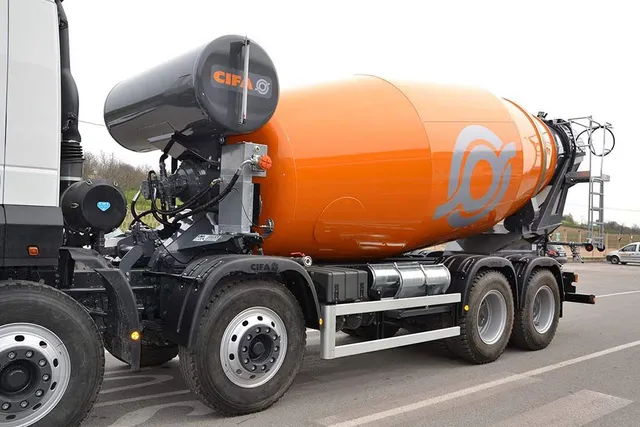
Concrete mixer trucks, also known as ready-mix trucks, are equipped with a rotating drum mounted on the truck chassis. These mixers transport and mix concrete at the construction site, ensuring it remains workable until it's needed. An example of a concrete mixer truck is the CIFA HD Series Concrete Mixer Truck, which combines durability and advanced features to deliver high-performance mixing and transportation.

How Concrete Mixers Work

Concrete mixers work by rotating a drum or pan to blend the concrete ingredients. The process involves several key steps:

  1. Loading Ingredients: The first step is loading the ingredients into the mixer. This typically includes cement, water, sand, and aggregates. The proportions of these materials are crucial for achieving the desired concrete mix.
  2. Mixing Process: Once the ingredients are loaded, the mixer starts rotating. The rotation of the drum or pan ensures that the materials are thoroughly combined. The mixing action is designed to ensure that the cement coats all the aggregates, resulting in a uniform mixture.
  3. Discharging Concrete: After the mixing process is complete, the concrete is discharged from the mixer. In drum mixers, this is achieved by tilting the drum, while in pan mixers, the concrete is often discharged through a discharge chute.
  4. Cleaning: After the concrete is discharged, the mixer needs to be cleaned to prevent residue buildup. This involves rinsing the drum or pan with water and, in some cases, using a cleaning agent.

Advantages of Concrete Mixers

Concrete mixers offer several benefits, including:

  • Consistency: They ensure a consistent mix, which is essential for the quality and strength of the concrete.
  • Efficiency: Mixing concrete in a machine is faster and more efficient than manual mixing.
  • Scalability: Mixers are available in various sizes, making them suitable for projects of all scales.
  • Reduced Labor: Using a mixer reduces the manual labor required for mixing concrete.

Applications of Concrete Mixers

Concrete mixers are used in a wide range of applications, including:

  • Construction Projects: They are essential for constructing buildings, bridges, roads, and other infrastructure.
  • Residential Repairs: Mixers are used for small-scale projects like driveways, patios, and foundations.
  • Industrial Use: In factories, mixers are used to produce precast concrete elements.

Key Features to Consider

When choosing a concrete mixer, consider the following features:

  • Capacity: Depending on the scale of the project, you'll need a mixer with an appropriate capacity. For large projects, a mixer truck like the CIFA HD Series Concrete Mixer Truck might be ideal.
  • Mixing Efficiency: Look for mixers with efficient mixing mechanisms to ensure a uniform mix.
  • Durability: Ensure the mixer is built to withstand the rigors of construction environments.
  • Ease of Use: Consider features that make the mixer easier to operate and maintain.

Conclusion

Concrete mixers are indispensable tools in the construction industry, ensuring that concrete is mixed uniformly and efficiently. Whether you’re working on a large commercial project or a small residential repair, understanding the different types and features of concrete mixers can help you choose the right equipment for your needs. For example, the CIFA HD Series Concrete Mixer Truck offers advanced features and reliable performance for transporting and mixing concrete on-site.

By choosing the right concrete mixer and understanding how it works, you can ensure that your construction projects are completed with high-quality, durable concrete.


What is a Concrete Mixer? Types, Functions, and Benefits

Read More: https://almarwan.com/p/AMH186/cifa-hd-series-concrete-mixer-truck.html

Wednesday, August 14, 2024

Burj Binghatti: World’s Tallest Residential Tower in Dubai

Explore the groundbreaking design, construction technologies, and luxury amenities defining Burj Binghatti's.

Explore the groundbreaking design, construction technologies, and luxury amenities defining Burj Binghatti's rise in Dubai.


Dubai is on the verge of unveiling a new architectural wonder, the Burj Binghatti, which aims to outshine the Burj Khalifa as the world's tallest residential tower. This ambitious project, set in Dubai Silicon Oasis, reflects the city's ongoing quest to push the boundaries of engineering and design. Developed by Binghatti Developers, the tower will rise over 100 stories, blending modern luxury with advanced technology, and offering residents an unprecedented living experience high above the bustling city.

The architectural design of the Burj Binghatti draws inspiration from the fluid and graceful lines of Arabic calligraphy, giving it a distinctive spiral shape that not only adds to its aesthetic appeal but also serves functional purposes. This innovative design allows for increased interior space, providing residents with expansive living areas and unobstructed views of Dubai's skyline. The tower’s façade, adorned with a combination of glass and metal, reflects the sunlight during the day and illuminates the night, making it a beacon in the city’s skyline.

Construction of a structure of this magnitude requires cutting-edge technology and precision. Cranes, particularly high-rise models, play a crucial role in the assembly of the Burj Binghatti. These cranes are responsible for lifting and positioning heavy construction materials, such as steel beams and glass panels, to the upper levels of the building. Their role is vital not only in ensuring that the materials reach the necessary heights but also in maintaining the integrity and design of the structure.

Concrete pumps are equally important in the construction process. As the tower rises, traditional methods of concrete delivery become inefficient. High-pressure concrete pumps are employed to transport the concrete mixture to the upper floors, ensuring that the building's structural core remains robust and stable. This method is critical in maintaining the building’s overall strength and durability, particularly given Dubai’s harsh climate conditions, which include high temperatures and strong winds.

The Burj Binghatti is designed to offer an unparalleled luxury living experience. The tower’s interior is a testament to opulence, featuring residences equipped with state-of-the-art technology, high-end finishes, and expansive floor plans. Each unit is designed with the resident's comfort and convenience in mind, incorporating smart home technologies that allow for the control of lighting, temperature, and security systems with the touch of a button. Floor-to-ceiling windows provide breathtaking views of the city, allowing residents to feel as if they are floating above Dubai.

Beyond the private residences, the Burj Binghatti boasts a range of luxury amenities that cater to the needs and desires of its elite residents. The rooftop pool offers a serene oasis with panoramic views of the city, while the state-of-the-art gym is equipped with the latest fitness technology, allowing residents to maintain their wellness routines without leaving the comfort of their home. The tower also includes an exclusive spa, offering a range of treatments designed to rejuvenate the body and mind. For those seeking a more social experience, the observation deck provides a space to mingle and take in the stunning views of Dubai’s ever-evolving skyline.

In addition to its luxurious offerings, the Burj Binghatti is a model of sustainability. The developers have incorporated advanced green technologies into the building’s design to minimize its environmental impact. Energy-efficient lighting, water conservation systems, and the use of sustainable materials all contribute to the tower's reduced carbon footprint. This focus on sustainability ensures that the Burj Binghatti not only meets the needs of its current residents but also preserves resources for future generations.

The Burj Binghatti is more than just a residential tower; it is a symbol of Dubai's relentless pursuit of excellence in architecture, design, and engineering. As the tower rises above the city, it will become a landmark, a testament to what can be achieved when visionary design is combined with cutting-edge technology. The Burj Binghatti will redefine luxury living in Dubai, offering an experience that is unmatched in the world of high-rise residential living.


construction technologies


Maximize Project Success with Dynapac Equipment from Al Marwan

Discover the benefits of choosing Dynapac for paving, compaction, and trench work, with options for every budget.

Discover the benefits of choosing Dynapac for paving, compaction, and trench work, with options for every budget.


When it comes to heavy equipment, whether you're working on a massive construction site, maintaining a road, or handling any industrial task, the machinery you choose can make or break your project. That's why it's crucial to select equipment that's not only reliable but also perfectly suited to the job at hand. Al Marwan's lineup of Dynapac equipment stands out as a prime example of how top-notch machinery can significantly boost efficiency, productivity, and ultimately, the success of your project.

Why Dynapac?

Dynapac is a name that's synonymous with durability, precision, and performance in the world of heavy machinery. With decades of experience in manufacturing, this brand has built a reputation for producing equipment that can withstand the rigors of demanding environments while delivering consistent, high-quality results. Whether you need equipment for paving, compaction, or trench work, Dynapac offers a range of machines that are up to the task.

The Power of Compact Pavers

Let’s start with the Dynapac F1250CS Compact Paver. If your project involves paving, this machine could be your best ally. Engineered to deliver exceptional performance, the F1250CS is designed to create smooth, uniform surfaces, even in tight spaces. Its compact design doesn’t mean it skimps on power—quite the opposite. This paper is ideal for jobs where precision is key but space is limited, such as residential streets, alleys, or smaller commercial projects. Its ability to deliver professional-grade results makes it a favorite among contractors who can't afford to compromise on quality.

Compaction That Counts

Moving on to compaction, Dynapac’s lineup includes some standout performers. The Dynapac CC1200 Ride-On Roller and the slightly more robust CC1250 are perfect examples of this. Both machines come equipped with powerful engines and provide precise control, making them ideal for achieving the compaction necessary for a stable foundation. Whether you're working on a road, a parking lot, or preparing a site for construction, these rollers ensure that the ground beneath is solid and secure. The importance of proper compaction can’t be overstated—without it, you risk settling and other issues that can compromise the integrity of your project.

Tackling Trenches with Ease

For those involved in trench work, the Dynapac D.ONE Diesel Trench Roller is a game-changer. Trenching often requires deep compaction in tight spaces, and this is where the D.ONE shines. Despite its compact size, it packs a punch, offering the power needed to ensure that trenches are properly compacted. This is critical for projects like utility installations, where poor compaction could lead to costly problems down the line.

Why Al Marwan?

Now, you might wonder, why purchase your equipment from Al Marwan? The answer is simple: experience, quality, and service. Al Marwan has been a trusted name in the heavy equipment industry for years, offering a wide range of machinery from reputable brands like Dynapac. They understand that every project has unique needs, and they’re committed to helping you find the right equipment to match those needs.

One of the standout features of Al Marwan’s offerings is the variety. Whether you’re looking to buy new equipment, like new machines, or even used ones, they’ve got you covered. This flexibility allows you to find the right machinery that fits your budget without compromising on quality. Additionally, Al Marwan provides expert support to help you make an informed decision. They know that choosing the right equipment is critical to the success of your project, and they’re there to guide you every step of the way.

The Bottom Line

In the world of construction and heavy industry, the right equipment is more than just a tool—it’s a partner in your project’s success. Al Marwan’s selection of Dynapac machinery exemplifies the importance of choosing quality and reliability. Whether you need a paver, a roller, or a trench roller, you can trust that Dynapac equipment from Al Marwan will get the job done, and done well.

So, the next time you're in the market for heavy machinery, take a moment to explore what Al Marwan has to offer. With their wide selection, expert guidance, and commitment to quality, you’ll be well-equipped to tackle any project that comes your way. Remember, success on the job site starts with having the right tools in your arsenal, and Al Marwan is here to ensure you have just that.


Dynapac for paving, compaction, and trench work


Kobelco Excavators: The 2026 Guide to Performance and Sales in the UAE

In 2026, Kobelco excavator models continue to dominate the UAE construction and mining sectors, prized for their Japanese engineering, supe...